Wednesday, 6 May 2015

78. Rowing - Single Skulls

Event: Rowing - Single Skulls
Date: 25th April 2015
Location: Sudbury Rowing Club
Cost: £100 Learn to Row Taster
Rules: Women's rowing events were first included in the 1976 Montreal Olympics. Races are held on rivers, canals or lakes over a distance on 2,000 metres. Races start under the supervision of an aligner and a starter, with umpires positioned along the course and at the finish line. The Single Skulls category sees one rower in each boat, rowing as fast as possible over the course. 

The Event:


Times:
London 2012 Olympic Gold Medal: 7:54.37 Miroslava Knapova, Czech Republic

Comments:  
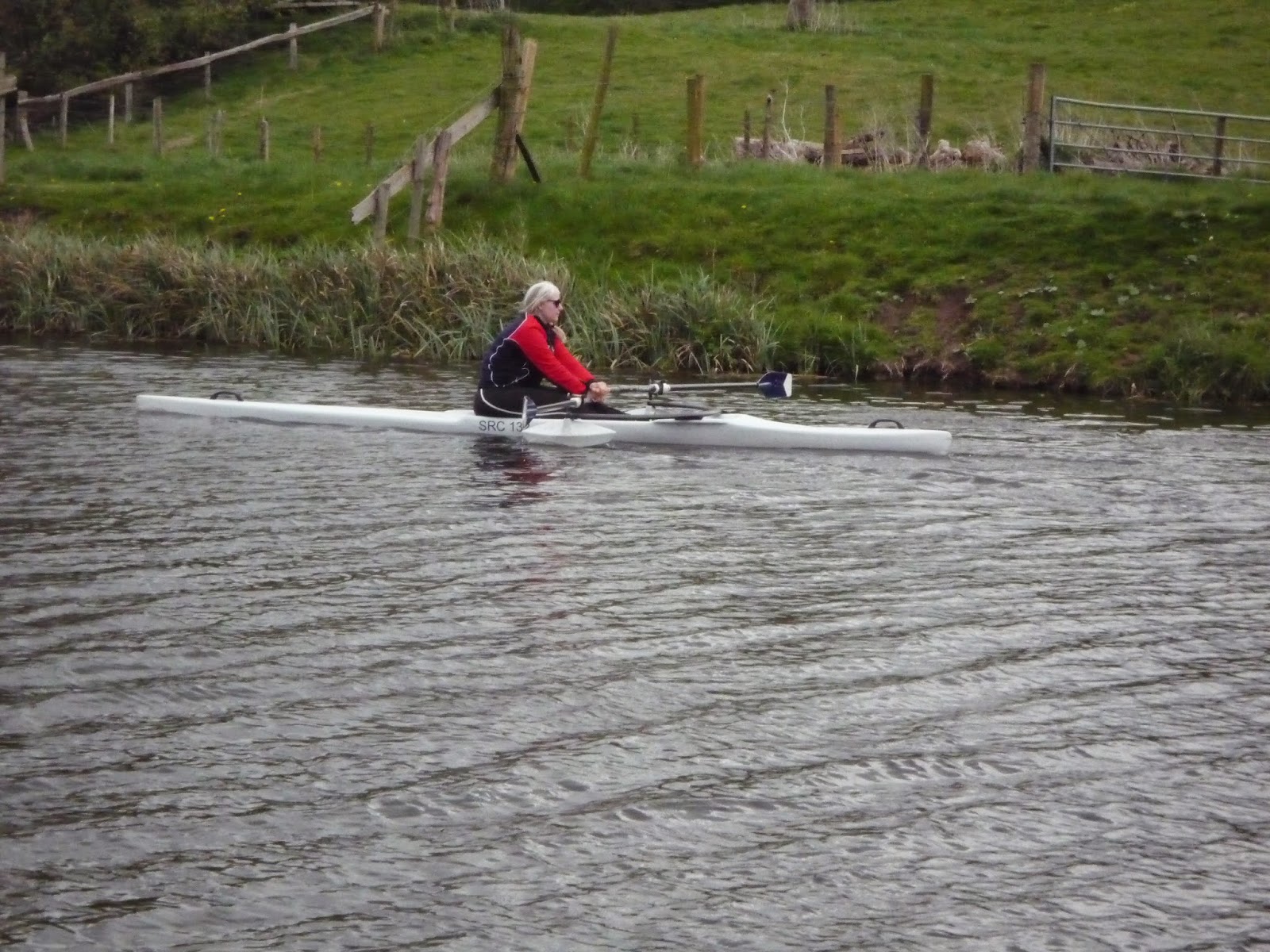
Sarah: The float stabilisers definitely gave us a bit of a cheat on this one, but they meant that we didn't have to worry too much about toppling in, and could concentrate on our stroke and overall technique. Left to my own devises, I found it really hard to stick to the edge of the river and constantly had to correct my position on the water so other boats could glide past. It took a while for me to master coordinating the oars, and I got some bruised knuckles in the process, but I definitely felt I improved; through lots of riverside encouragement and trial, error and wobbles.

Ellie: Rowing in the single boats is a whole different kind of pressure; for starters we moved from using one oar to two and it is definitely not as easy as Bridget Jones makes it look! You need to be very precise with your movements and how you sit in the boat in order to simply move in a straight line - which is something I struggled with - let alone all the complicated arm movements, navigating, watching for other boats.... and getting in and out of the boat is difficult enough. AND a swan attacked me... well, it sort of flew over the top of me but it had that devilish look in it's eye, if you know what I mean. I think rowing is something I enjoy much more when in a boat with others especially whilst a novice; I felt much more at ease with others around. That being said, when the sun was out and I could take some calm strokes and gaze into the meadows, it felt very blissful... swan attacks aside. 


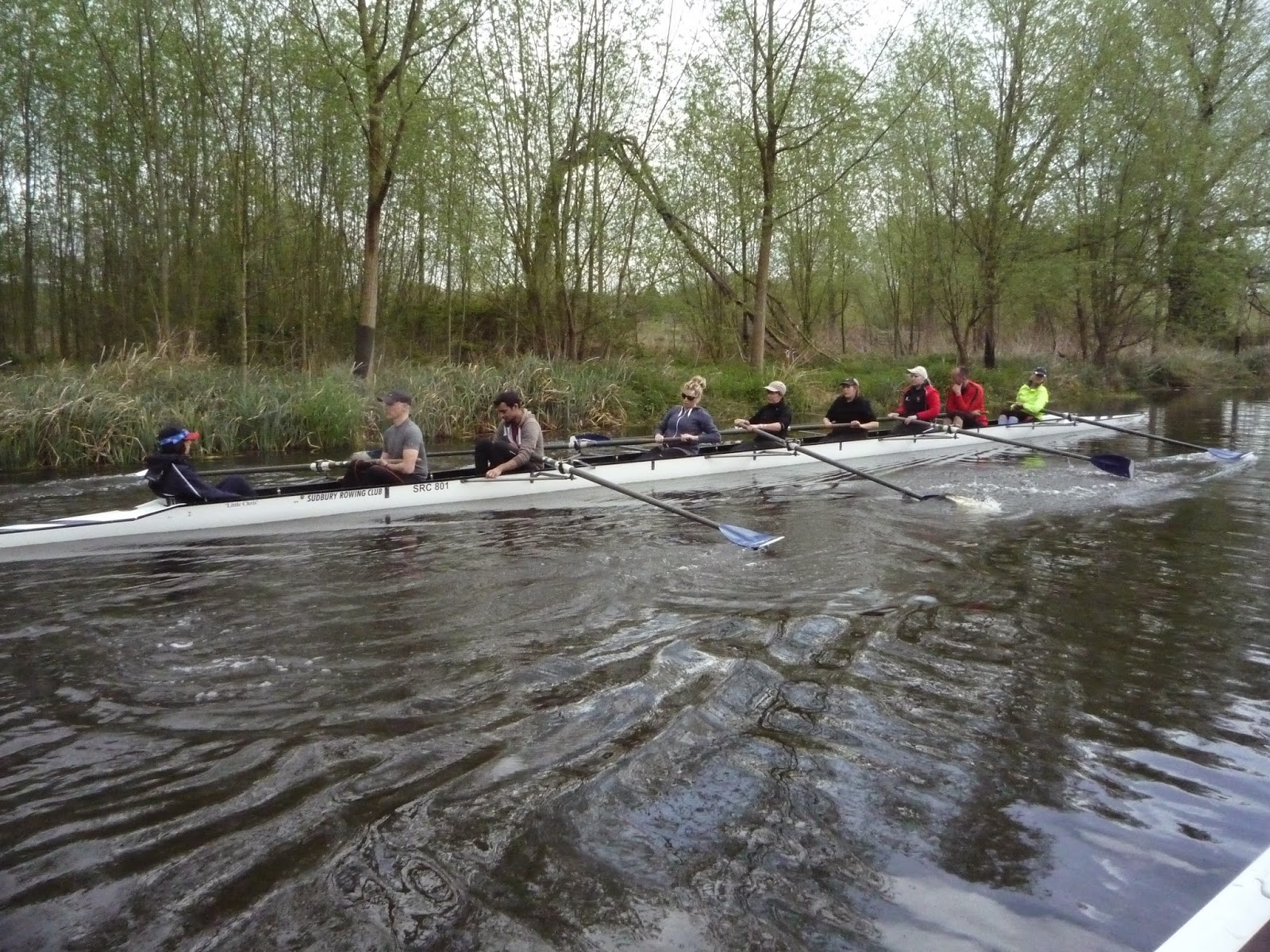
77. Rowing - Eight

Event: Rowing - Eight 
Date: 25th April 2015
Location: Sudbury Rowing Club
Cost: £100 Learn to Row Course
Rules: Women's rowing events were first included in the 1976 Montreal Olympics. Races are held on rivers, canals or lakes over a distance on 2,000 metres. Races start under the supervision of an aligner and a starter, with umpires positioned along the course and at the finish line. The Eight category has eight rowers in the boat with one oar each. The cox shouts directions and encouragement to the rowers.

The Event:


Results: 
London 2012 Olympic Gold Medal: USA

Comments:  
Sarah: After loving canoeing last year, I was really looking forward to rowing and getting back on (hopefully not in) the water. The feeling you get when gliding through the water in the sunshine is pretty unbeatable. The Eight was the first boat we tackled with the club, and over a few sessions we gradually built up from two people rowing with the others sitting (steadying) the boat, to all eight rowers pulling at the same time. It was more than a little wobbly at times, and a mix of exhilaration and terror when blades caught on the water and caused the boat to rock. With the help of our fearless cox, we persevered and no one fell in! We barely began to cover the techniques required, but for those few strokes where we were all synchronised, it was completely wonderful.

Ellie: Where to start with Rowing... well, we started with the Eight. Yes, just like the Oxford and/or Cambridge crews we powered up and down the River Stour... well, not quite like the boat race crews... I've never seen them looking like they were going to have some kind of fear induced panic attack. Or that they had completely forgotten everything that they were told 15 minutes ago. Or a look of alarm on their faces when things get a bit wobbly and they hadn't remembered a towel. Or like they have forgotten what side of the boat they were sitting on. Or what all the terminology means... or words in general for that matter...
Although it felt like the scariest way to start our rowing education, with hindsight, it was definitely the best. The load is shared between you, there is always someone to give you some tips and analyse what you are doing - for better or worse - and you don't have to worry about looking where you are going or where you are steering. As Sarah says, the times when we all rowed together or you were on a streak of good form and things clicked felt wonderful and you could really appreciate the passage you were making along the water and how it would be possible, given a lottttt of time and practice, to be able to call yourself someone who can row. 


Saturday, 2 May 2015

76. Rhythmic Gymnastics - Individual All-Round


Event: Rhythmic Gymnastics - Individual All-Round
Date: 14th April 2015
Location:  South Essex Gymnastics Club, Basildon Sporting Village
Cost: £5.50 per lesson 
Rules: Rhythmic Gymnastics is one of the two sports performed exclusively by women. The sport is a combination of gymnastics and dance, with gymnasts performing choreographed movements to music using hand apparatus such as rope, hoop, balls, club and ribbon. In individual competitions, gymnasts perform with two of the apparatus on the first day, and the other two on the second day. Their scores are added, and in the final they perform with all four apparatus.  
  
The Event:


London 2012 Winner: Yevgeniya Kanayeva, Russia.

Comments:

Sarah: We had an introduction to all the different apparatus, then got to choose our favourite for the individual routine. I had a ribbon when I was little, and thought there may be a vague chance I could at least keep it moving for the duration of the routine. I found the individual routine so uncomfortable; much like I found with the artistic gymnastics floor routine, the thought of everyone watching whilst I stumbled through made me cringe! There's safety in numbers in the team!

Ellie: I think I chose the clubs to see what could be done with something a little harder and less glamorous - a description that could be applied to me! I felt a real difference between the equipment and how I 'performed' with them - the ribbon made me floaty, the hoop made me giddy! and the clubs made me feel quite technical... Again, I really enjoyed this routine but as Sarah says, there is nowhere to hide when you are performing on your own!


75. Rhythmic Gymnastics - Group All-Round

Event: Rhythmic Gymnastics - Group All-Round
Date: 14th April 2015
Location:  South Essex Gymnastics Club, Basildon Sporting Village
Cost: £5.50 per lesson 
Rules: Rhythmic Gymnastics is one of the two sports performed exclusively by women. The sport is a combination of gymnastics and dance, with gymnasts performing choreographed movements to music using hand apparatus such as rope, hoop, balls, club and ribbon. The group apparatus are alternated for each Olympics. Each team consists of five gymnasts, with only three of them performing with each apparatus.  

   
The Event:


London 2012 Winners: Russia.

Comments:
Sarah: A dance routine with props, what's not to like?! Putting together the team routine was so much fun, and despite a few mess-ups during the performance, we fumbled our way through. We're far from masters of the hoops, but this has to be one of the most fun events we've done!

Ellie: I really, really hope that the video above shows how much we enjoyed this routine! We had an introduction to all apparatus on week 1 and week 2 was dedicated to routines. I was giggling the whole way through, I was having such a good time. Watching the video back, I can see that with a little more thought and finesse and loads more practice I really could have made all of those catches and moves work and I would do it all over again in a heartbeat - it was great!

Thanks to Holly and Becky for being so happy to get roped in!

Tuesday, 28 April 2015

74. Synchronised Swimming - Team

Event: Synchronised Swimming - Duet
Date: 12 April 2015
Location: Clacton Synchro Club, Clacton Leisure Centre
Cost: £4 per session (8 sessions)
Rules: Synchronised swimming is one of the three disciplines in which only women compete. The sport tests strength, flexibility, grace, artistry and long underwater endurance. Competitions consist of a technical routine and a free routine. The technical routine sees a team of eight swimmers perform specific moves with a time limit of 2:50. The free routine has no restrictions on the moves or music, and has a time limit of 4:00. The results of the two routines are combined to produce a final score.

The Event:


Olympic Gold Medal London 2012: Russia

Comments:
Sarah: We'd had a few weeks break after our duo routine, so the dry walk-through was really useful to refresh our memory and adapt the routine for the team. We had a change of music too, so it ended up feeling like a completely different routine, which was great. It was really fun being back in the pool and working with so many others; being surrounded by more people meant it was a bit easier to get a quick glimpse of someone else's arm or leg to make sure I was in time.
 
Ellie: New music, new team mates, completely new experience. It was great to reinvent our routine with a new soundtrack and with some new moves. I definitely found this routine more satisfying - it was far more spectacular with more people and it felt more sparkly and skilled with swimmers who know what they were doing - it was very impressive how quickly they could pick the routine that had taken us 3 months to devise! 
Synchronised swimming has been a wonderful experience and I would encourage anyone of any age to find a taster course and have a go. The level of concentration, control and poise that is needed is astonishing.
Huge thanks to our team and all at Clacton Synchro Club!

Friday, 17 April 2015

73. 400m Hurdles

Event: 400m Hurdles
Date: 12th April 2015
Location: Colchester Harriers, Arena Sports and Leisure Centre, Colchester 
Cost: Free
Rules: Competitors sprint over 400m, whilst jumping over 10 hurdles evenly placed along the track. The fastest wins. Each athlete must stay in their allocated lane. They are allowed to knock the hurdles, but will be disqualified if they hit the hurdle with their hand.

The Event:


Times:
Sarah: 2:10.75
Ellie:   3:47.93 
London 2012 Olympic Gold Medal: 0:52.70 - Natalya Antyukh, Russia

Comments:  
Sarah: The last time we did hurdles I twisted my knee when landing and it's only recently felt normal again, so I was a bit apprehensive about returning to the event. We refreshed our hurdling memory with a few practices, before setting off. I found the 400m much more enjoyable than the 100m; with a bigger distance between the hurdles it gave me more time to sort my stride out and prepare myself for the jump over. My legs were definitely tiring around halfway and my hurdling turned into clambering.

Ellie: If you look back you will see that I claimed, after the 100m Hurdles, to be looking forward to the 400m's. Well, I'm a fool. 400m is the whole way round the track and that's a really long way for a rubbish runner. I enjoyed the 'jumping' over the hurdles bit but none of the rest of it. To get an idea of my discomfort I videoed my attempt and here it is... enjoy! 


Tuesday, 14 April 2015

72. 400m

Event: 400m
Date: 12th April 2015
Location: Colchester Athletics Track 
Cost: Free
Rules:  Runners sprint once around a 400m track. They start from blocks and run in lanes. A reaction time of less than 0.1 is deemed a false start and runners will be recalled, with the responsible athlete disqualified. A runner can also be disqualified if they step out of their designated lane.

   
The Event: 


Times:
Olympic Gold Medal London 2012: 49.55, Sanya Richards-Ross, USA.
Sarah: 1:57.80
Ellie: 3:31.82

Comments:  
Sarah: It was a pleasure to be back at the track after our winter break (we're not as hardy as the Harriers, who are up there training in all weathers), and the sun was shining for our morning of 400m events. We started with the 400m sprint; pretty simple rules here- just run as fast as possible around the track, making sure to stay in your lane. Simple on the surface; but as ever, there is much more to it than appears, and Chris patiently showed us techniques to lengthen our stride and run as close to the line as possible. I really enjoyed this event, though it was knackering; it's a long way to run flat-out!   
         
Ellie: I knew I had to endure this event to get it over and done with but with Chris' extra drills this morning and his insider knowledge I had some practical steps on my mind to make the most of an event that makes me feel slow, stupid and thoroughly unfit. Lengthening my stride and remembering to take the inside line so that you don't run further than necessary - these are ideal tips for getting the best from your gruelling 400ms!